I Switched to the Framework Laptop 13 Diy Edition 2025 and Here is What Happened
Introduction
The author switched to the Framework Laptop 13 Diy Edition 2025 after years of using mainstream thin-and-light laptops. The move was prompted by a growing desire for repairability, long-term value, and the ability to customize hardware without relying on manufacturer service centers. This article documents what happened after the change: how the laptop performed in day-to-day work, travel, and creative tasks; which trade-offs emerged; and whether this modular, repair-first approach suits typical buyers' needs.
First impressions and why the switch was made
Out of the box (or rather, assembled by the author), the Framework Laptop 13 Diy Edition 2025 feels different from most modern laptops. It prioritizes serviceability and flexibility over a sealed, ultra-slim shell. The DIY edition is intentionally designed as a platform: users can select and swap components such as memory, storage, and I/O modules, and later replace or upgrade core elements when needed. The author chose it to reduce e-waste, avoid planned obsolescence, and gain practical control over upgrades and repairs.
Detailed product review and analysis
Design and build quality
The Framework 13 Diy Edition has a utilitarian aesthetic that clearly signals its purpose. The chassis is solidly constructed, mostly aluminum, with accessible fasteners and clearly marked removable panels. The weight and footprint are reasonable for a 13-inch device — portable enough for frequent travel but not trying to be the thinnest device on the market. Build tolerances are good: gaps are even, and the hinge feels stable without excessive wobble. Every external decision — from the modular port bay covers to the replaceable keyboard tray — favors repairability over absolute minimalism.
Modularity and repairability
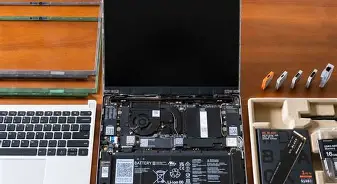
This is the central feature. The DIY Edition exposes Framework’s core philosophy: every major component is intended to be user-replaceable. RAM and storage are accessible without soldered modules, the mainboard is replaceable, and I/O ports are implemented as swappable cards. The author found that routine upgrades — swapping a larger NVMe SSD, adding more RAM, or replacing a single USB-C card with an HDMI card — were straightforward and required only common tools. For buyers who value low-cost, local repairs, or want to extend device lifespan beyond the typical three to four years, this design is transformational.
Display, keyboard, and input
The 13-inch panel on the Framework 13 Diy Edition is calibrated toward balanced color and power efficiency rather than maximum brightness or extreme color gamut. In indoor work and travel contexts it performs well: text is crisp, viewing angles are wide, and the aspect ratio is comfortable for productivity. The keyboard emphasizes tactile feedback and serviceability; keycaps and switches can be replaced if wear occurs. The trackpad is responsive and accurate for pointer work; although it may not match the top-tier glass trackpads in absolute smoothness, it is more than sufficient for coding, web work, and light photo editing.
Performance and thermals
Performance depends on the configuration chosen. Because the DIY Edition allows component choice, users can optimize for battery life or raw compute. In the author's typical mixed-use workload — browser tabs, local code builds, virtual machines, and occasional video rendering — the Framework delivered consistently reliable performance. Thermals are tuned for sustained workloads rather than brief turbo bursts: CPU throttling under long heavy loads is possible, but fan noise remains controlled. For most professional and student workflows the machine hits a useful sweet spot between performance and acoustics.
Ports and connectivity
One of Framework’s unique advantages is its approach to I/O. Instead of a fixed array of ports, the DIY Edition uses modular cards that the user can swap to get the preferred mix: extra USB-A, HDMI, MicroSD, or dedicated Ethernet. This reduces the need for dongles while increasing future flexibility. Wireless connectivity with Wi‑Fi and Bluetooth standards is reliable and works across Windows and Linux with minimal fuss. For buyers who travel between meeting rooms, studios, and client sites, the ability to tailor ports to each role is particularly valuable.
Find top-rated Laptops & Computers products at great prices.
See Deals →Battery life
Battery life in daily use depends on the chosen CPU and display options. In balanced configurations the author experienced a full workday of mixed tasks (roughly eight to ten hours) with moderate screen brightness and light video playback. More performance-oriented configurations reduce runtime, while power-optimized setups extend it. Importantly, the battery is user-replaceable, which addresses a common long-term pain point: batteries that lose capacity over several years no longer force a whole-device replacement.
Software compatibility and developer friendliness
The Framework platform is deliberately friendly to Linux and alternative operating systems. The author tested mainstream Linux distributions and Windows; both ecosystems worked well. Framework’s open documentation and community make troubleshooting and low-level tasks easier for developers and power users. For people who need to run containers, virtual machines, or cross-platform development stacks, the DIY Edition provides a dependable, configurable base.
Real-world usage scenarios
In practical terms, the Framework 13 Diy Edition suits several buyer types:
- Software developers: They benefit from upgradeable RAM and storage and a machine that tolerates heavy local workloads.
- IT professionals and tinkerers: They appreciate the repair-first design and the ability to maintain a device within an organization without service contracts.
- Students: Students who want a durable machine that can be repaired affordably over its lifetime may find the DIY approach cost-effective.
- Sustainability-conscious buyers: People focused on reducing e-waste find the replaceable parts and documented repair process compelling.
- Creative professionals: Photographers and videographers benefit from easy storage expansion and painless SSD swaps, though those needing top-tier color accuracy may prefer specialized displays.
Pros & Cons
- Pros:
- Exceptional repairability and long-term upgrade path
- Modular I/O system reduces need for dongles and adapters
- Developer- and Linux-friendly with strong documentation
- User-replaceable battery and core components extend usable life
- Transparent parts availability and active community support
- Cons:
- Not the absolute thinnest or lightest option on the market
- Performance is configuration-dependent and can lag in the highest-end creative workloads
- Some users may find the initial assembly and upgrade choices confusing
- Availability and component lead times can fluctuate for niche parts
- Warranty and repair policies differ from mainstream OEM models — buyers must understand self-service implications
How it compares: at-a-glance table
| Category | Framework Laptop 13 Diy Edition 2025 | Typical Thin-and-Light Alternative | Premium Ultraportable (e.g., well-known competitor) |
|---|---|---|---|
| Upgradability / Repairability | High — user-replaceable mainboard, RAM, storage, ports | Low to medium — often soldered RAM, limited repairability | Low — premium thin designs usually sealed |
| Performance | Medium to high depending on config | Medium — balanced for day-to-day tasks | High — strong single-core performance and efficiency |
| Battery Life | Moderate to good — configuration dependent | Good — optimized for mobile use | Very good — strong efficiency tuning |
| Ports | Modular — user-selectable | Fixed set — often limited | Fixed — often few ports to preserve thinness |
| Price / Value | Good long-term value if longevity is prioritized | Competitive initial price but replacement costs can add up | Premium price for design and performance |
| Ideal buyer | Users who value repairability, customization, and sustainability | General consumers who want convenience and small size | Users who prioritize the absolute best display/perf in a premium shell |
Buying guide: who should consider the Framework 13 Diy Edition and how to choose
When deciding whether to choose the Framework Laptop 13 Diy Edition 2025, potential buyers should weigh a few core considerations. The following guide helps match priorities to the Framework proposition.
1. Priorities: longevity and repairability vs. immediate convenience
If longevity and the ability to repair or upgrade the machine in-house matter more than the sleekest possible case or the lightest weight, the Framework model is a strong fit. Users who value a sealed, fuss-free device with manufacturer-managed repairs may prefer conventional OEMs, but those buyers concede potential long-term replacement costs.
2. Intended workloads
For software development, office productivity, web work, and light creative tasks, the Framework performs admirably. For heavy-duty 3D rendering, large neural-model training, or prolonged high-bitrate video rendering, a workstation-class machine or an external GPU solution may be more appropriate. Select CPU and RAM configurations to match the workload: more RAM for larger development or VM workloads, larger NVMe for media libraries.
3. Port needs and mobility
Think about which ports are used daily. The modular port card system allows customization, but it also means the buyer should plan the I/O mix at purchase or keep a small selection of spare cards. Travellers who frequently connect to projectors, wired networks, or external storage will appreciate the flexibility. Consider whether you need an Ethernet card, a dedicated HDMI card, or legacy USB-A ports.
Shop the latest Laptops & Computers picks on Amazon.
Browse Now →4. Operating system and software environment
Developers and those who prefer Linux will find the ecosystem friendly. If the buyer needs guaranteed vendor-provided drivers for a specific enterprise software stack, verify compatibility before committing. Framework’s documentation and community resources are useful for compatibility checks.
5. Warranty, parts availability, and support model
Understand the difference between self-service and traditional warranty repair. Framework’s model supports end-user repairs, but buyers should read the terms and check part availability in their region. If local support and immediate replacements matter, ask about regional shipping times for parts and potential service options.
6. Budget and long-term cost
While initial costs can be competitive, the long-term value becomes apparent through repairability and upgrades. Factor in potential savings from replacing a battery or upgrading storage years later rather than purchasing an entirely new machine. For organizations, the total cost of ownership over multiple years often favors repairable designs.
Practical tips for new Framework owners
- Start with a configuration that supports current needs but leaves room to upgrade RAM or storage.
- Buy or keep a small toolkit with precision screwdrivers and a static-safe mat for safe component swaps.
- Document the build and keep track of serials and part numbers — it simplifies reordering.
- Check the community forums and official documentation for step-by-step guides on common repairs.
- Consider adding a second SSD as a swappable backup drive for quick recovery during travel.
Conclusion
The Framework Laptop 13 Diy Edition 2025 reorients the laptop conversation from disposability toward stewardship. For the author, the switch delivered practical benefits: fewer forced upgrades, lower long-term maintenance costs, and the satisfaction of controlling the device lifecycle. It is not a perfect fit for everyone. Buyers who demand the lightest possible chassis, out-of-the-box maximum color accuracy for professional photo editing, or the absolute highest single-thread performance may find other models more suitable.
However, for people who prioritize repairability, who like to tinker, or who want a machine they can keep and evolve over many years, the Framework 13 Diy Edition represents a meaningful shift. It makes ownership less of a cycle of replacement and more of a relationship with a platform that adapts instead of becoming obsolete. That practical change is what the author found most valuable after the switch.