Is the 8849 Tank 4 Rugged Phone Still Good in 2026? Long-Term Review
I've been using the 8849 Tank 4 rugged phone for several months now — not just carrying it around in a pocket, but taking it to work sites, on muddy weekend hikes, and using it as my daily driver for calls, navigation, and streaming. I bought it because I wanted a phone that could survive real abuse without feeling like a bargain-basement device. After living with it through rain, drops, long days away from a charger, and everyday tasks, here's my honest, long-term take on whether the Tank 4 still makes sense in 2026.
Why I chose the Tank 4
My job and hobbies put my phone through scenarios most mainstream phones avoid: dust, hard knocks, sometimes submersion for short periods, and long days without convenient charging. I didn't want to baby a flagship in a thick case all the time. I was attracted to the Tank 4 for its advertised ruggedness, the promise of a big battery, and the idea of a device designed first to be tough and second to be smart. I expected compromises — cameras and polish typically take a back seat on rugged devices — but I wanted a phone that would be dependable and still usable as a modern smartphone.
What I tested and how I used it
Over the months I tested the Tank 4 in ways that matter to me:
- Daily commute and office use: email, Slack, calls, light web browsing.
- Worksite exposure: pockets full of dust, occasional concrete drops from waist height, and tools rattling nearby.
- Outdoor weekend use: hikes in rain and mud, using GPS offline maps and music playback for long stretches.
- Battery endurance testing over multi-day trips without guaranteed access to chargers.
- Camera checks in daylight and low light for quick snaps and document scanning.
Design, build quality, and durability
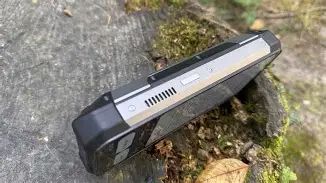
Right out of the box the Tank 4 feels like what it is meant to be: solid and confidence-inspiring. The frame has thick bumpers and aggressive texturing that make it hard to drop, and the ports are protected by flaps that click closed. In my experience that click matters — after several months the flaps still seal well and haven't flapped open in my pocket. The device survived a handful of accidental drops to concrete (about waist height) with only minor scuffs to the bumpers and no screen cracking. One time I dropped it during a muddy hike and left it in a puddle for 20 minutes; I rinsed off the mud and it functioned immediately.
That said, rugged phones are not indestructible. I did notice hairline scratches on the screen after heavy use, even though I kept it in a pocket without sharp tools. If you plan to use this for climbing or carrying near metal gear, I still recommend a tempered screen protector for peace of mind. The Tank 4's chassis shows wear elegantly — scuffs on the rubberized edges and a tiny nick on the backplate after an especially nasty drop — but nothing that affects usability.
Display and everyday usability
The Tank 4 uses a bright, practical LCD that is easy to read outdoors. I appreciated that on sunny hikes: GPS and maps remained legible even under direct sunlight. The display isn't a flagship OLED, so blacks are grayish and contrast is lower, but I rarely found it a real problem for navigation, reading, or watching short videos. Refresh rate and touch responsiveness are fine for standard tasks, but if you're used to ultra-smooth 120Hz flagships, this will feel a step down.
One minor annoyance: the touchscreen sometimes needed firmer presses when my fingers were wet or gloved. There is a glove mode but it wasn't always flawless — I had to take my glove off for precise taps more than once. For me, that's a predictable rugged phone compromise, but it's worth noting if you expect flawless wet-finger responsiveness.
Performance and software
Performance has been perfectly adequate for the day-to-day tasks I put the Tank 4 through. Apps open in reasonable time, multitasking between mail, messaging, and navigation is smooth, and casual gaming runs acceptably. Heavy mobile games will push the phone and result in warmer temperatures and occasional frame drops. I noticed sustained performance was better outdoors for navigation and streaming than during long gaming sessions — if you plan to use a rugged phone as a portable gaming rig, this isn't the ideal choice.
The software experience is pragmatic. The phone comes with a lightly skinned Android build and a handful of preinstalled utilities for rugged features like an SOS button, flashlight modes, and customizable physical buttons. I liked that those utilities were useful and not intrusive. Updates have been occasional — I received a couple of security patches and one incremental system update in my time with the device. If staying on the absolute latest Android release matters to you, be aware that rugged vendors often lag behind mainstream manufacturers on major OS upgrades.
Shop the latest Laptops & Computers picks on Amazon.
View Offers →Camera performance
I was pleasantly surprised by the daylight camera: it captures usable detail for social posts and quick document scans. Colors are a touch punchy out of the box, but that made photos look lively without needing much editing. Low-light performance is the Tank 4's weaker area — images in dim environments show noise and softer detail, and the night modes that exist are slower and less reliable than flagship equivalents.
One thing I appreciated: the camera app includes a document-scanning mode that worked very well for receipts and jobsite photos where I needed to capture text from a distance. If photography is a primary consideration for you, especially low-light night shots, this model won't beat a modern flagship. For practical, work-oriented photos, though, it covers the essentials.
Battery life and charging
Battery life is one of the Tank 4's strong suits in my experience. On a typical day with navigation, email, messages, and intermittent media, I easily got through a full day and often into a second day without charging. On long hikes with GPS and music playing, it comfortably lasted a full day and then some. For multi-day trips where I needed reliability, I appreciated the "set it and forget it" battery behavior — it discharges slowly when idle and doesn't demand constant charging.
Charging speeds are reasonable but not fast-charge-flagship level. I used the included charger or a USB-C power bank for top-ups. Wireless charging is not something I relied on here, and the rugged design meant I was fine without it. If you constantly top up during short breaks, don't expect the Tank 4 to match the 50W+ charging speeds available on some mainstream phones; it's more about long runtime than super-fast fill-ups.
Connectivity and call quality
Call quality and connectivity have been solid. I used the Tank 4 across urban, suburban, and rural areas and found the phone maintained a good signal. Wi-Fi and Bluetooth behavior have been stable; I paired it with cars and earbuds multiple times without weird dropouts. GPS lock is reliable, and I appreciated consistent navigation accuracy when mapping trails and jobsite coordinates.
A small annoyance: the fingerprint reader, mounted on the side, is convenient but has occasional trouble recognizing fingers if they're dirty or wet. Facial unlock works well in daylight but is less reliable in low-light. Again, these are typical trade-offs in a device built to be used in adverse conditions — secure unlock is available, but it's not as frictionless as a flagship sensor under an OLED.
What I liked (Pros)
- Real durability: Survived drops, rain, and mud without functionality loss.
- Excellent battery life: Lasted me through long days and many multi-day trips without stressing about a charger.
- Practical display: Readable in bright sunlight, good for navigation and field use.
- Useful rugged features: SOS button, programmable physical keys, and reliable port covers.
- Sound daily performance: Smooth for email, messaging, navigation, and media streaming.
What bothered me (Cons)
- Camera limits: Low-light images are noisy and lack detail compared with modern flagships.
- Software update cadence: Only a couple of updates during my months of use — not the fastest for OS upgrades.
- Touch quirks when wet: The touchscreen and fingerprint reader are less reliable with wet hands or heavy gloves.
- Chunky size: The phone is large and heavy; it doesn't disappear in a pocket and feels more like a tool than a daily fashion accessory.
Quick comparison: Tank 4 vs. Typical Rugged Competitors
| Feature | 8849 Tank 4 (my experience) | Doogee / Ulefone (typical) | CAT-style (typical) |
|---|---|---|---|
| Durability | Very solid — survived drops, water, and mud; port flaps remain secure | Comparable durability, sometimes bulkier bumpers | Built for industrial use; often similar protection with enterprise support |
| Battery life | Excellent — multi-day use realistic | Also strong; some models with huge batteries outperform in raw capacity | Good; prioritizes reliability over longevity extremes |
| Camera | Good in daylight; poor low-light | Daylight fine, variable low-light | Functional for documentation; not photography-first |
| Software updates | Limited cadence | Varies; often modest support | Often conservative with updates but stable |
| Price/value | Feels like a fair trade for durability and battery | Usually competitive on price | Pricier for enterprise support, durable warranties |
Buying guide: Is the Tank 4 right for you?
Choosing a rugged phone in 2026 still comes down to what you need it to survive and how you use it every day. Here's how I think about it after months with the Tank 4.
1. How rough is your use?
If your phone spends most of its life in a relatively protected pocket, a mainstream phone in a good case might do. If your daily routine includes drops, dust, water, or work in harsh environments, the Tank 4's design and sealing are worth the trade-offs.
2. Do you need flagship camera performance?
If photography and night shots matter a lot, consider a mainstream flagship or a rugged phone that explicitly focuses on camera hardware. The Tank 4 is good for practical photos and documentation but won't replace a high-end camera phone in low light.
Looking for the best Laptops & Computers deals on Amazon?
Shop Amazon →3. Battery priority?
If long uptime between charges is a priority — multi-day hikes, long shifts without reliable charging — the Tank 4 is a strong pick. It focuses on endurance rather than ultra-fast recharging.
4. Software and long-term updates
If getting the latest Android feature set and fast security patches matters to you, check the vendor's update history. In my experience the Tank 4 receives occasional patches, but major OS upgrades may be slow.
5. Size and portability
Be realistic about the Tank 4's heft. It's not a pocketable svelte phone; it's a tool. If size and weight bother you, try holding one in a store first or compare dimensions with something you currently carry.
6. Accessories and repairability
Check available accessories (cases, spare batteries if supported, screen protectors) and warranty/repair options before buying. I appreciated that the Tank 4's common parts and accessories were easier to find than with smaller, niche brands, but service times can vary.
Practical tips from my experience
- Use a basic tempered screen protector: even though the screen held up, small scratches accumulate and a protector is cheap insurance.
- Clean and inspect port flaps regularly: mud dries and can prevent a perfect seal long-term; a quick rinse and dry keeps them sealing well.
- Set up the physical buttons: I programmed one button to launch camera and another for a flashlight shortcut — these shortcuts are genuinely useful in the field.
- Carry a compact USB-C power bank for emergency top-ups: while battery life is strong, occasional navigation-heavy days will benefit from a quick boost.
- Calibrate your expectations for software: back up your data and keep an eye on updates, but don't expect monthly feature upgrades like you may see on flagship brands.
Final thoughts and conclusion
After several months of using the 8849 Tank 4 as my everyday phone and field device, I can say it's a dependable, well-rounded rugged phone that does the job it was built to do: survive hard use and keep working. I appreciated the long battery life, reliable navigation performance, and the reassuring build quality that let me focus on tasks instead of worrying about accidental damage.
What I found was a device that makes sensible trade-offs: it sacrifices some photographic polish, software update speed, and thinness in exchange for durability and endurance. Those trade-offs are acceptable — even desirable — if you need a phone that behaves like a tool first. If you prioritize cameras, ultra-fast charging, or the absolute smoothest software experience, there are better mainstream phones for those purposes.
In my experience, the Tank 4 is still a solid choice in 2026 for people who need reliable rugged performance without paying enterprise premiums. It won't impress the tech-review thumbnail crowd, but it will keep you connected and productive in environments where a fragile flagship would have already failed. For someone like me — who spends time both in the field and in day-to-day life — it strikes a practical balance that I found valuable and dependable.