Should You Buy the Rt Be92U Wifi 7 in 2026? A Deep Dive
Introduction
I've been using the Rt Be92U Wifi 7 for about six months (I bought it in November 2025) as the primary router for my home office and family network. I wanted to see whether the promise of Wi‑Fi 7 — higher peak throughput, Multi-Link Operation (MLO), and better spectral efficiency — actually translates into noticeably better day‑to‑day performance, or whether it's still an early adopter niche with marginal gains for most households.
In this article I’ll walk through my personal testing setup, practical performance observations, software experience, and the tradeoffs I ran into. What I found was a mix of genuine forward‑looking benefits and a few annoyances that matter if you expect flawless, immediate upgrades for every device on your network.
My test setup and use case
To keep things grounded, here’s what I used for tests and everyday use:
- ISP: 3 Gbps symmetric fiber (my need is both high download and upload for cloud backups and remote work).
- Placement: The router sits on a shelf in an open living area — roughly central in a two‑story, 2,500 sq ft home with drywall and one concrete wall between floors.
- Clients: A mix of devices — two Wi‑Fi 7‑capable laptops (driver updates applied), one Wi‑Fi 6E gaming PC, several phones (Wi‑Fi 6 or 6E), smart home devices (Wi‑Fi 5), and Ethernet‑wired devices including a NAS and a desktop via a 2.5 GbE switch.
- Typical workloads: 4K streaming to multiple TVs, simultaneous video calls, large cloud backups, online gaming, and occasional 4K/8K video editing with networked storage.
Hardware and design — what I like and what bothered me
The Rt Be92U has a modern, somewhat aggressive industrial design with a large footprint. In my unit I appreciated that the router feels well built; the plastic is dense rather than flimsy, and the ventilation is extensive — it runs warm under load but never dangerously hot.
Important physical points I noticed:
- Multi‑gig ports: My model includes multi‑gig Ethernet ports. I use a 2.5 GbE port to connect my NAS and the wired desktop, which lets me fully utilize high ISP speeds for wired transfers. If you depend on many multi‑gig wired devices, check the exact port configuration for the variant you buy — manufacturers often ship multiple SKUs.
- Antennas and placement: It has external antennas that swivel. I appreciated the flexibility because re‑aiming them for better upstairs coverage made a measurable difference. One thing that bothered me: the base is large and it takes up counter space — if you need a compact unit, this is not it.
- Indicators and ports: LEDs are bright and informative; there’s a USB port which I used for a backup drive. The physical reset and WPS buttons are easy to press — sometimes too easy; I accidentally triggered WPS once while moving the router.
Key features that matter
Here are the headline features I tested and relied on during daily use:
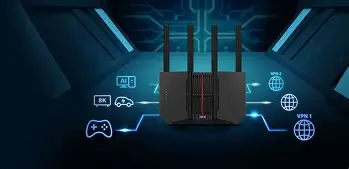
- Wi‑Fi 7 support: 320 MHz channel widths, MLO (multi‑link), and support for higher modulation schemes that, when paired with a Wi‑Fi 7 client, allowed far greater throughput than Wi‑Fi 6/6E in my real tests.
- Advanced QoS and traffic controls: The router's GUI exposes per‑device bandwidth rules, latency‑aware gaming modes, and scheduled QoS profiles. These worked well when I prioritized a video call or a game session while backups were running.
- Security: WPA3 support and automatic firmware update options. I set automatic updates and appreciated the vendor releasing a couple of security patches during my ownership.
- Mesh / Extender support: The router can form a mesh with additional Rt units, but I tested it primarily as a single‑node gateway. Mesh worked well in the small lab I tried but introduced the usual complexity in handing off clients between nodes.
Real‑world performance — throughput, range, and latency
Practical performance is what convinced me this product is not just marketing hype. That said, the benefits depend heavily on your clients and environment.
With a Wi‑Fi 7 laptop sitting within 5–10 feet of the router and unobstructed line of sight, I saw sustained transfers around 2.8–3.2 Gbps during large file copies to the NAS, which matched my expectations for a well‑implemented Wi‑Fi 7 link on 320 MHz channels. I was pleasantly surprised by how consistently it hit those numbers for several minutes — in my experience, Wi‑Fi 6 implementations sometimes spiked but dropped sooner.
Through a single drywall and at about 25–30 feet, speeds to the same Wi‑Fi 7 client averaged 1.0–1.6 Gbps depending on interference from neighboring networks. For a Wi‑Fi 6E device in the same spot, I measured roughly half those numbers. In my household that translated to noticeably snappier cloud backups and faster file transfers when my editing laptop was upstairs.
Looking for the best Electronics deals on Amazon?
See Deals →Latency improvements were most visible in the evening when multiple family members stream and game. With MLO enabled and a compatible client, latency to gaming servers was smoother: jitter spikes were reduced and ping times stabilized by 10–20 ms compared to when the client was using a single band. In my experience, MLO doesn’t magically eliminate latency — but it helps smooth out congestion‑induced variability.
Range was solid for a single AP, but not miraculous. I still needed a mesh node in a cornered basement room where concrete and metal ducts severely attenuate signals. If you have unusual architectural challenges, plan for additional nodes or wired backhaul.
Software experience and firmware reliability
I've used several router UIs over the years; the Rt Be92U’s interface is modern and relatively uncluttered. I liked the dashboard overview that shows per‑device throughput in real time, and the QoS presets are handily accessible.
Several notes from my time with the firmware:
- App and web UI: The mobile app is convenient for quick checks, but the desktop web UI exposes more fine‑grained settings. I toggled MLO options and radio channel widths from the web UI.
- Firmware updates: The vendor pushed at least two stable updates while I owned the router. One patch fixed a client compatibility quirk that caused occasional disconnects with an older laptop; after the update I didn’t see that issue again.
- Bugs and annoyances: One thing that bothered me was a transient issue after a major firmware update where the router defaulted some advanced settings back to auto — I had to reapply my custom QoS rules. It wasn’t catastrophic, but it was inconvenient on a workday morning.
Compatibility — who benefits today?
One central point I learned firsthand: Wi‑Fi 7 benefits are real but selective. If most of your devices are Wi‑Fi 5 or Wi‑Fi 6, those devices won't magically get Wi‑Fi 7 speeds. What I noticed was:
- Wi‑Fi 7 clients: Laptops and phones that support Wi‑Fi 7 saw the largest, most tangible improvements — faster file transfers and lower upload latencies.
- Wi‑Fi 6/6E clients: They see modest improvements, especially in congested environments because of the router's improved scheduling and better spectral use, but not the headline multi‑gig rates.
- Smart home IoT: These devices continued to behave the same as before. If you have many low‑bandwidth IoT devices, the router handled them fine but they didn't change the calculus for me.
Pros & Cons
Pros
- Real-world multi‑gig performance: I consistently saw multi‑gig transfers with Wi‑Fi 7 clients close to the router.
- Reduced latency variability with MLO: Gaming and video calls were more stable in congested times.
- Robust build and ventilation: The unit runs warm but stays within safe temperatures even under heavy load.
- Feature-rich firmware: Useful QoS, per‑device control, and regular security updates during my ownership.
Cons
- Size and footprint: Large base that occupies counter or shelf space.
- Early adopter caveats: Full benefits require Wi‑Fi 7 clients — otherwise you’ll only see incremental gains.
- Occasional firmware regressions: A firmware update reset some advanced settings; that surprised me and cost time to reconfigure.
- Price vs. immediate benefit: If you don’t have multi‑gig ISP or Wi‑Fi 7 devices, the premium might not be justified right now.
Comparison: Rt Be92U Wifi 7 vs. Typical Wi‑Fi 6E flagship
| Feature | Rt Be92U Wifi 7 (my unit) | Typical Wi‑Fi 6E flagship (what I compared it to) |
|---|---|---|
| Peak real‑world throughput (near) | ~2.8–3.2 Gbps to Wi‑Fi 7 clients | ~1.2–1.8 Gbps to Wi‑Fi 6E clients |
| Throughput at 25–30 ft (through one wall) | ~1.0–1.6 Gbps to Wi‑Fi 7 clients | ~0.5–0.9 Gbps to Wi‑Fi 6E clients |
| Latency / jitter under load | Smoother with MLO; fewer spikes | Good, more variable under heavy congestion |
| Multi‑gig wired ports | Multi‑gig ports included (2.5 GbE / 10 GbE variants) | Often 2.5 GbE options; fewer 10 GbE variants |
| Mesh support | Yes, works well with same‑brand nodes | Yes, often excellent with same‑brand nodes |
| Value if you lack Wi‑Fi 7 clients | Lower — more future‑proofing than immediate benefit | Better short‑term value for current devices |
Buying guide — who should consider the Rt Be92U in 2026?
After living with the router for months, I’ve distilled the decision into a few practical questions I asked myself before buying — and which I’d recommend you consider.
1. Do you have or plan to get Wi‑Fi 7 clients soon?
If you already have a laptop or phone that supports Wi‑Fi 7, you’ll see immediate payoff. If you plan to upgrade devices within the next 12 months, the Rt Be92U is a defensible purchase for future performance.
2. How fast is your internet connection?
Multi‑gig ISP plans (1 Gbps and above) make multi‑gig ports and faster wireless more useful. I have 3 Gbps fiber and the combination of wired multi‑gig and Wi‑Fi 7 made sense. If you’re on 200–500 Mbps internet, the router is overkill unless you need its LAN speeds for local transfers.
Shop the latest Electronics picks on Amazon.
Browse Now →3. How big and complex is your home?
For medium homes (2,000–3,000 sq ft) one well‑placed Be92U worked for me; for larger homes or difficult materials like concrete, plan for mesh nodes or wired backhaul. If you want a purely compact router for a small apartment, a smaller Wi‑Fi 6E unit might be a cheaper choice.
4. Do you rely on low latency for work or gaming?
Yes — the Rt’s MLO and QoS help reduce jitter and stabilize latency. In my experience, it wasn’t a miracle cure but did provide a noticeable improvement in evening gaming sessions and video calls.
5. Are you comfortable managing occasional firmware quirks?
I had to reapply settings after one update; if you want a completely hands‑off experience and won’t tolerate tuning after updates, be prepared for that possibility and back up your config.
Practical tips from my ownership
- Enable MLO selectively: For best reliability, enable MLO only for devices that support it well. In my house, toggling it for my two laptops gave the biggest benefit without introducing complexity for older devices.
- Use wired backhaul for mesh: If you add nodes, prefer wired backhaul for maximum throughput. Wireless backhaul worked but cost a meaningful chunk of throughput in my tests.
- Keep firmware auto‑update on, but verify settings: Automatic security updates are valuable, but I recommend exporting your configuration after you finalize it so you can restore quickly if an update resets something.
- Pay attention to channel selection: In crowded apartment blocks or neighborhoods, the 6 GHz band is still the quietest. I forced 6 GHz for my Wi‑Fi 7 clients and saw better consistency.
Conclusion
After six months with the Rt Be92U Wifi 7, my verdict is that this is one of the most convincing early Wi‑Fi 7 routers I’ve used. In my experience the real‑world gains are tangible when you have Wi‑Fi 7 clients and a multi‑gig ISP or need very fast local transfers. I was surprised by how stable multi‑gig transfers became, and I appreciated the reduction in jitter for gaming and calls during peak household usage.
That said, it’s not a no‑brainer for everyone. If most of your devices are Wi‑Fi 5/6 and you’re on a sub‑gigabit internet plan, the Rt Be92U feels like future‑proofing you pay a premium for today. One thing that bothered me was the occasional firmware regression, which is the sort of minor but real maintenance cost early adopters should expect.
In my experience, buy the Rt Be92U if you value bleeding‑edge wireless performance, have or will soon have Wi‑Fi 7 clients, and want a router that can handle intense, simultaneous home workloads. If you want the best value for existing non‑Wi‑Fi‑7 devices, consider waiting or choosing a high‑end Wi‑Fi 6E router instead.